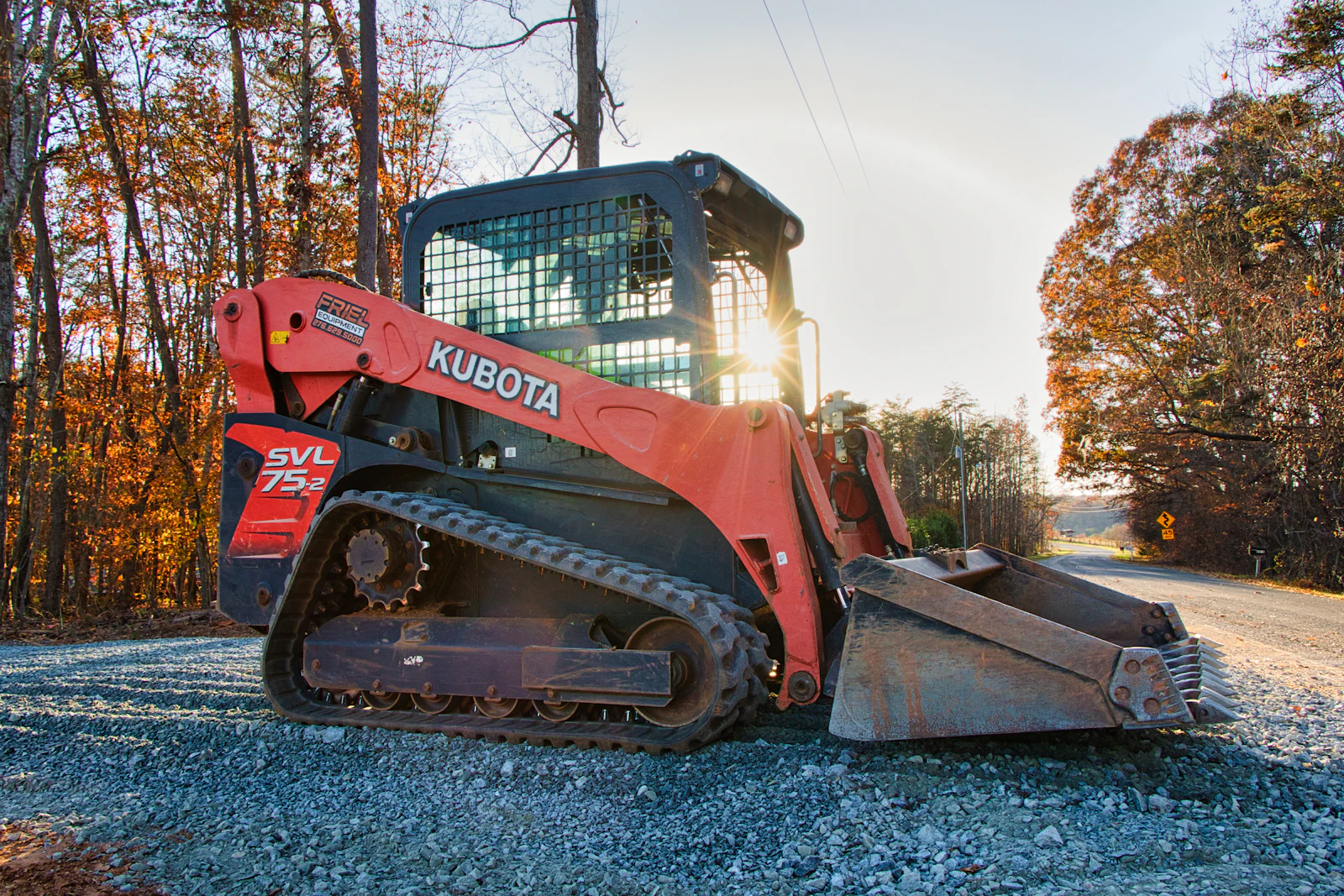
For Fort Worth (DFW) projects involving digging footings, 2026 planning budgets for skid steer loader equipment hire typically land in the $250–$425/day, $950–$1,400/week, and $2,600–$3,900/4-week range for a mid-size wheeled skid steer (commonly 2,000–3,000 lb rated operating capacity), depending on hydraulic flow, tires, and how “job-ready” the unit is (bucket included vs. attachment-heavy order). Compact track loaders (CTLs) usually price higher at $325–$550/day, $1,250–$1,900/week, and $3,400–$5,200/4-week, but can reduce downtime in Fort Worth clay after rain. National rental houses (United Rentals, Sunbelt Rentals, Herc Rentals) and local dealer-rental operations often stock multiple classes; final cost is driven more by attachments, delivery, and return condition than the base day-rate.
| Vendor |
Daily Rate |
Weekly Rate |
Review Score |
Website |
| Hoyer’s Equipment Rentals |
$285 |
$950 |
10 |
Visit |
| ABC Equipment Rental (DFW Metroplex delivery) |
$295 |
$1 100 |
8 |
Visit |
| Moore Rental Service, Inc. |
$350 |
$1 225 |
9 |
Visit |
| Fox Rental (Grapevine / Euless; serves Fort Worth) |
$330 |
$1 317 |
9 |
Visit |
Skid Steer Loader Rental Rates Fort Worth 2026
The ranges above are intended for estimating and procurement planning (not a quote). In practice, Fort Worth rate sheets and online “published examples” can show line-item pricing by size class. For example, a Texas dealer-rental listing for a 2,675–2,999 lb skid-steer class shows a published example of $325/day, $975/week, and $2,925/month (often defined as a 4-week rental period), which aligns with the mid-market portion of the planning ranges when you add typical rental charges and jobsite logistics.
Estimator assumption set (use these to keep internal budgets consistent):
- “Week” = 7 consecutive calendar days in most rental contracts; “month” is commonly 28 days (4 weeks), not a calendar month.
- Base rate includes one general-purpose bucket (confirm bucket width and tooth condition). Forks, augers, trenchers, breakers, brooms, and grading buckets are typically adders.
- Fuel is almost always excluded; units are expected to return “full” (or at the same level delivered), with refuel charges if short.
- Damage waiver and/or insurance is typically optional but often selected on footing work due to below-grade strike risk (stakes, rebar, form lumber, curb edges).
What Changes Skid Steer Equipment Hire Cost for Footing Work in Fort Worth?
Footing excavation with a skid steer is a cost-sensitive use case because the machine is frequently moving slowly, turning tightly, and working close to existing slabs, utilities, and forms. In Fort Worth, the two biggest cost levers are (1) ground conditions (gumbo/clay becomes impassable quickly) and (2) attachment selection (auger vs. trenching vs. bucket-only). Those levers feed into rental duration: if you lose half a day to traction or spoil handling, you often spill into another billed day or weekend cycle.
Machine Class, Tires/Tracks, and Hydraulics
For digging footings, many crews default to a mid-size skid steer with a toothed bucket for production. However, if you need consistent cut lines, stable grade, and traction on disturbed subgrade, a CTL can reduce “spin-out” and rework. Expect these typical 2026 cost deltas in Fort Worth procurement:
- CTL premium over wheeled skid steer: commonly +$75 to +$150/day (or the weekly/monthly equivalent) for a similar capacity class.
- High-flow hydraulics adder: commonly +$40 to +$90/day when required for planers, heavy trenchers, or some broom/forestry heads.
- Solid/foam-filled tire option: when available, often +$25 to +$60/day versus standard pneumatic tires (helps avoid puncture downtime around demo debris or form stakes).
Attachment Adders That Commonly Hit Footing Budgets
Attachment pricing varies widely by vendor and availability. For skid steer loader hire for digging footings, budget these typical adders so your PO doesn’t get surprised:
- Auger drive unit: $85–$140/day, $260–$420/week.
- Auger bit (per diameter): $20–$45/day (common diameters for pier/sonotube work can require multiple bits).
- Trencher attachment: $150–$260/day (useful for grade beams or shallow utility runs feeding a footing area).
- Hydraulic breaker/hammer: $190–$325/day (for limestone lenses, old concrete, or hardpan removal).
- Pallet forks: $25–$55/day (highly recommended if you’re staging rebar, form lumber, or pallets of bag mix).
- Grading/finish bucket: $35–$65/day (often cheaper than burning extra labor hours hand-trimming footing trenches).
Published historic rate schedules from large renters show that attachment adders can be a meaningful portion of the invoice (for example, forks, trenchers, auger power units, and breakers listed separately from the base skid-steer line).
Hidden-Fee Breakdown for Skid Steer Loader Equipment Hire
In the Fort Worth market, the invoice total for skid steer equipment hire is frequently driven by “non-rate” items. If you’re managing multiple small footing jobs, these can eclipse the base rental.
Delivery / Pick-Up: Flat vs. Mileage and DFW Logistics
- Typical local delivery/pickup (each way): $175–$325 within a standard radius (often ~10–20 miles from the yard). Downtown, gated communities, or tight access can push this higher.
- Loaded mileage outside radius: commonly $5–$8 per loaded mile after the included zone.
- Same-day / after-hours dispatch: often +$75–$150 per trip, especially if you miss the yard’s cut-off time.
- Re-delivery / “could not access site” trip: often billed as a second trip at $175–$325 (confirm gate width, overhead clearance, and whether a lowboy can stage).
Some published government contract rate files show transportation as a separate charge (for example, flat transport amounts within a radius), reinforcing why delivery should be treated as its own budget line instead of “absorbed.”
Damage Waiver, Insurance, and Deposits
- Damage waiver: commonly 10%–15% of the time-and-material rental charges (base + attachments), sometimes with minimums.
- Environmental / recovery / admin fee: commonly 2%–5% of rental charges (varies by contract wording).
- Deposit / authorization hold (if required): commonly $500–$2,500 depending on account status and machine class.
Fuel, Cleaning, Wear, and Return-Condition Charges
- Refuel charge (diesel): commonly $6–$9 per gallon plus a $35–$75 service/admin line if returned short.
- Basic cleaning: often $95–$175 if returned muddy or with clay packed in the undercarriage; CTLs can trend toward the higher end due to track packing.
- Concrete/mortar removal or hardened spoil cleanup: frequently $195–$295 (or billed as shop time) if the machine comes back with cured material on the bucket, chassis, or quick-attach.
- Cutting edge / tooth wear (if assessed): budget $8–$20 per tooth if teeth are missing/damaged; confirm whether normal wear is included.
Billing Rules That Commonly Add a Day (Or Two)
Billing mechanics matter on footing work because schedules shift due to inspections, form changes, and ready-mix timing.
- Minimum rental: commonly 1 day even if used for a few hours (some accounts may have a 4-hour minimum on smaller equipment, but skid steers are often day-minimum).
- Weekend/holiday billing: if you take delivery Friday and off-rent Monday, many contracts treat that as 3–4 billed days (or a full week) unless you negotiate a weekend rate.
- Off-rent cut-off: many yards require off-rent notice by roughly 2:00–3:30 PM local time for next-business-day pickup; missing the cut-off can add +1 billed day.
- Late return / after-hours pickup: if pickup slips, budget $75–$150 per hour for standby or redelivery when a driver is held on site.
Fort Worth-Specific Considerations That Affect Hire Cost on Footing Excavation
Local conditions drive real rental cost because they change productivity and the probability of chargeable events.
- Clay soil + summer storms: Fort Worth clay can turn a wheeled skid steer into a “spinning” machine that burns time. If rain is in the forecast, a CTL premium can be cheaper than a schedule slip into another billed day.
- Heat management: July–September heat can trigger more idle time to cool/clean radiators. Budget for a faster cycle (weekly hire instead of daily “as-needed”) to avoid paying extra mobilizations due to weather-driven delays.
- DFW traffic and jobsite delivery windows: Many sites (schools, medical, downtown corridors) restrict deliveries to 7:00–9:00 AM or midday windows, increasing the risk of after-hours charges or a missed dispatch.
Example: Skid Steer Equipment Hire for a Small Footing Package in Fort Worth
Scenario: You’re digging a trench footing line plus 24 pier holes for an addition. The GC wants the holes completed before inspection, then you’ll use the skid steer for backfill and site cleanup.
- Planned rental duration: 4 working days (Tue–Fri). You want a buffer for inspection delays.
- Equipment hire plan: wheeled skid steer ($250–$425/day) + auger drive ($85–$140/day) + one bit ($20–$45/day) + forks ($25–$55/day)
- Logistics plan: delivery Tuesday, pickup Friday. Budget $175–$325 each way for transport.
- Risk allowances: damage waiver at 10%–15%, plus cleaning allowance of $95–$175 if clay packs the chassis.
Operational constraint: If inspection slips to Monday, you may get billed across the weekend (potentially +2 extra days) unless you arrange a weekend program or schedule an off-rent/pickup before cut-off on Friday. That single coordination detail can swing the job’s equipment hire cost more than the difference between two comparable skid steer models.
Procurement note: If you expect rock/limestone lenses, consider a breaker add-on ($190–$325/day) for one “contingency day” rather than losing a full day waiting on a separate breaker mobilization.
How to Build a Reliable 2026 Skid Steer Hire Budget for Footings
To keep skid steer loader equipment hire costs predictable in Fort Worth, treat the rental like a small subcontract: scope the production work (excavate, spoil handling, backfill, cleanup), then scope the logistics (delivery window, access, return condition, and billing cutoffs). The most consistent estimating approach is to budget the base machine at a weekly rate whenever the schedule has any inspection dependency; on footing packages, the “extra day” risk is high.
Budget Worksheet
- Base skid steer (wheeled) hire: allow $950–$1,400/week (or $250–$425/day if truly short-duration and no weekend exposure).
- Track upgrade contingency (if rain/soft subgrade): allow +$300–$600/week (or plan CTL at $1,250–$1,900/week from day one).
- Attachments:
- Auger drive: $260–$420/week
- Auger bit(s): $20–$45/day each (allow 2 bits if multiple diameters)
- Forks: $112–$250/week equivalent (or $25–$55/day)
- Grading bucket: $35–$65/day (optional but often saves labor)
- Breaker contingency: $190–$325/day for 1 day (only if rock risk)
- Delivery and pickup: allow $350–$650 total (two-way), plus mileage beyond zone at $5–$8/loaded mile.
- Damage waiver: allow 10%–15% of rental charges (machine + attachments).
- Environmental/admin: allow 2%–5% of rental charges.
- Fuel: allow a refuel exposure of $35–$75 service fee plus $6–$9/gal if not returned full (set an internal “return full” rule to avoid this line entirely).
- Cleaning/undercarriage: allowance $95–$175; increase to $195–$295 if concrete/mortar contact is likely.
- Wear/damage contingency: allow $150–$400 (tires, teeth, hydraulic couplers, broken lights, etc.).
- Tax: apply your project’s tax treatment; if taxable, Fort Worth-area combined sales tax is commonly around 8.25% (confirm by jobsite address and exemption status).
- Schedule contingency: add 10%–15% to the total equipment hire budget if inspections or rain could extend the rental across a weekend.
Rental Order Checklist
- PO and cost code: include separate lines for base machine, attachments, delivery/pickup, damage waiver, and consumables/fees so invoices can be matched without rework.
- Delivery address details: gate code, contact name/phone, earliest access time, and a defined staging area for truck unload.
- Delivery window and yard cutoffs: confirm booking cut-off (often same-day early afternoon) and whether missed windows trigger $75–$150 after-hours handling.
- Machine spec confirmation: wheeled vs CTL, rated operating capacity, bucket width, tooth count/condition, and whether quick-attach is standard.
- Attachment compatibility: standard-flow vs high-flow; confirm the coupler type and hose routing for auger/trencher/breaker.
- Utility locate plan: document that 811 locates are complete before digging footings; utility strikes are outside normal wear and can become a claim event.
- Insurance documentation: COI requirements, damage waiver election, and any site-specific insurance limits (some sites require higher auto liability for delivery).
- Off-rent procedure: define who calls off-rent, what time, and how confirmation is documented (email or portal screenshot).
- Return-condition documentation: take time-stamped photos at pickup/return (all four sides, bucket cutting edge, quick-attach, cab/controls, hour meter, and fuel level).
Cost-Control Tactics That Actually Work on Footing Jobs
- Choose weekly hire when there is any inspection dependency: a single slip day can cost more than the day-to-week delta.
- Bundle attachments up front: adding an auger or forks mid-rental can trigger additional delivery charges or lost production time.
- Prevent “dirty return” charges: designate 30–45 minutes at end of shift for cleaning, especially after clay conditions. That time is typically cheaper than a $95–$295 cleaning line.
- Control weekend exposure: if you don’t need the machine Saturday/Sunday, plan a Friday off-rent call before cut-off and schedule pickup.
- Plan spoil placement: footing excavation often fails on “where does the dirt go?” If spoil is pushed too far, you burn rental hours traveling instead of cutting.
When a Mini Excavator Might Be Cheaper Than Skid Steer Hire
If the work is primarily trenching and hole excavation with limited material handling, a mini excavator can reduce rework and hand labor. However, many footing packages still benefit from the skid steer for spoil management, backfill, and site cleanup. A common procurement strategy is: excavator for precision digging + skid steer for support, but only if you can keep both utilized; otherwise, your equipment hire cost doubles without doubling production.
Practical Notes for Fort Worth Footing Operations
- Dust control: on infill sites near occupied properties, you may be required to control dust. If you add a water hose setup or a skid-steer sweeper later, budget the adders early (broom/sweeper attachments can be premium-priced and frequently require high-flow).
- Access constraints: many residential gates are tight; a smaller frame skid steer may reduce access risk but can increase duration. A single re-delivery at $175–$325 can wipe out the “smaller machine savings.”
- Heat and idle time: keep radiator screens clear. Excess idle time is still billed time, and overheating events can become damage disputes if not documented.
Summary: Fort Worth Skid Steer Loader Equipment Hire Costs for Digging Footings
For 2026 estimating in Fort Worth, treat skid steer loader hire as base rate + attachments + logistics + return condition. Plan around $250–$425/day (wheeled) or $325–$550/day (CTL), then explicitly carry delivery ($175–$325 each way), waiver (10%–15%), cleaning ($95–$295), and weekend/off-rent rules. With footing work, the cleanest savings usually come from (1) preventing an extra billed day and (2) avoiding unplanned attachment and cleaning charges—not from chasing a slightly lower day rate.