Build your next estimate with CountBricks
Create an itemized estimate for your project, with materials, labor, and quantities you can review and edit.
Create my estimateStart a 7-day free trial. Sign up, then enter your project details.
Skid Steer Loader Rental Rates Dallas 2026
For Dallas-area footing work in 2026, budget skid steer loader equipment hire costs (machine only) in the planning range of $200–$450/day, $640–$1,620/week, and $1,700–$4,275 per 4-week month, with the low end typically aligning to smaller-frame wheeled units and the high end aligning to larger-frame, higher-HP, higher-capacity machines or compact track loaders (CTLs) that are billed in the skid steer category by some rental yards. In the Dallas–Fort Worth market, national fleets (e.g., United Rentals, Sunbelt Rentals, Herc Rentals) and well-run independents will often quote similar base rate bands, but the all-in hire number for digging footings usually swings more on delivery, attachments (trencher/auger), waiver/insurance, and hour-meter overage than on the base day rate alone.
| Vendor |
Daily Rate |
Weekly Rate |
Review Score |
Website |
| United Rentals |
$350 |
$1 250 |
7 |
Visit |
| Sunbelt Rentals |
$335 |
$1 200 |
9 |
Visit |
| Herc Rentals |
$330 |
$1 180 |
8 |
Visit |
| Texas First Rentals (HOLT CAT) |
$360 |
$1 300 |
8 |
Visit |
| The Home Depot Rental (Compact Power Rentals) |
$320 |
$1 120 |
8 |
Visit |
What Drives Real Skid Steer Equipment Hire Cost for Digging Footings in Dallas?
When you are pricing a skid steer loader hire package specifically for digging footings (and then managing spoils, backfill, and material staging), the equipment coordinator’s job is to control the “hidden multipliers” that turn an acceptable day rate into an expensive invoice. In Dallas, the biggest cost drivers tend to be (1) selecting the right size and undercarriage for Texas clay and jobsite access constraints, (2) metered hours and shift rules (8-hour day assumptions), (3) delivery/pickup timing inside the DFW traffic pattern, and (4) attachment availability (trenchers and augers book out during peak concrete and utility seasons).
Dallas-Specific Field Conditions That Affect Hire Pricing
- Soil and spoils handling: North Texas clay can be dense and sticky; that increases cycle time and cleaning time. Plan for a toothed bucket and a defined washout/clean-down plan so you don’t pay a surprise cleaning charge (often $75–$350 depending on severity and whether concrete slurry is present).
- Heat impact on productivity: Summer heat in Dallas can push you into shorter effective production windows; if your crew runs long days to “beat the heat,” you can trigger hour-meter overages (see shift rates below). That turns a “1-day” hire into a day rate plus overtime hours.
- Metro delivery realities: Tight delivery windows around downtown Dallas, staged access at commercial sites, and afternoon congestion can lead to redelivery or “attempted delivery” charges (commonly $75–$150) if the driver can’t offload safely on first attempt.
Choosing The Skid Steer Class For Footing Excavation (Cost First, Not Spec Sheet First)
For footing excavation support, most contractors hire a skid steer to (a) cut shallow grades and trench approaches with an attachment, (b) move spoils continuously so the trench stays open and safe, and (c) backfill and compact in lifts (often with a separate compactor plate). The most cost-stable choice is usually a mid-frame unit with enough hydraulic performance to run a trencher or auger without bogging down, while still fitting residential access gates or tight commercial pads.
Typical Dallas 2026 Hire Bands By Configuration (Planning Allowances)
Use the following planning allowances to avoid underestimating “apples-to-apples” rental quotes:
- Wheeled skid steer (general-purpose bucket): commonly lands near the lower-to-mid part of the Dallas planning range ($200–$350/day depending on size and availability).
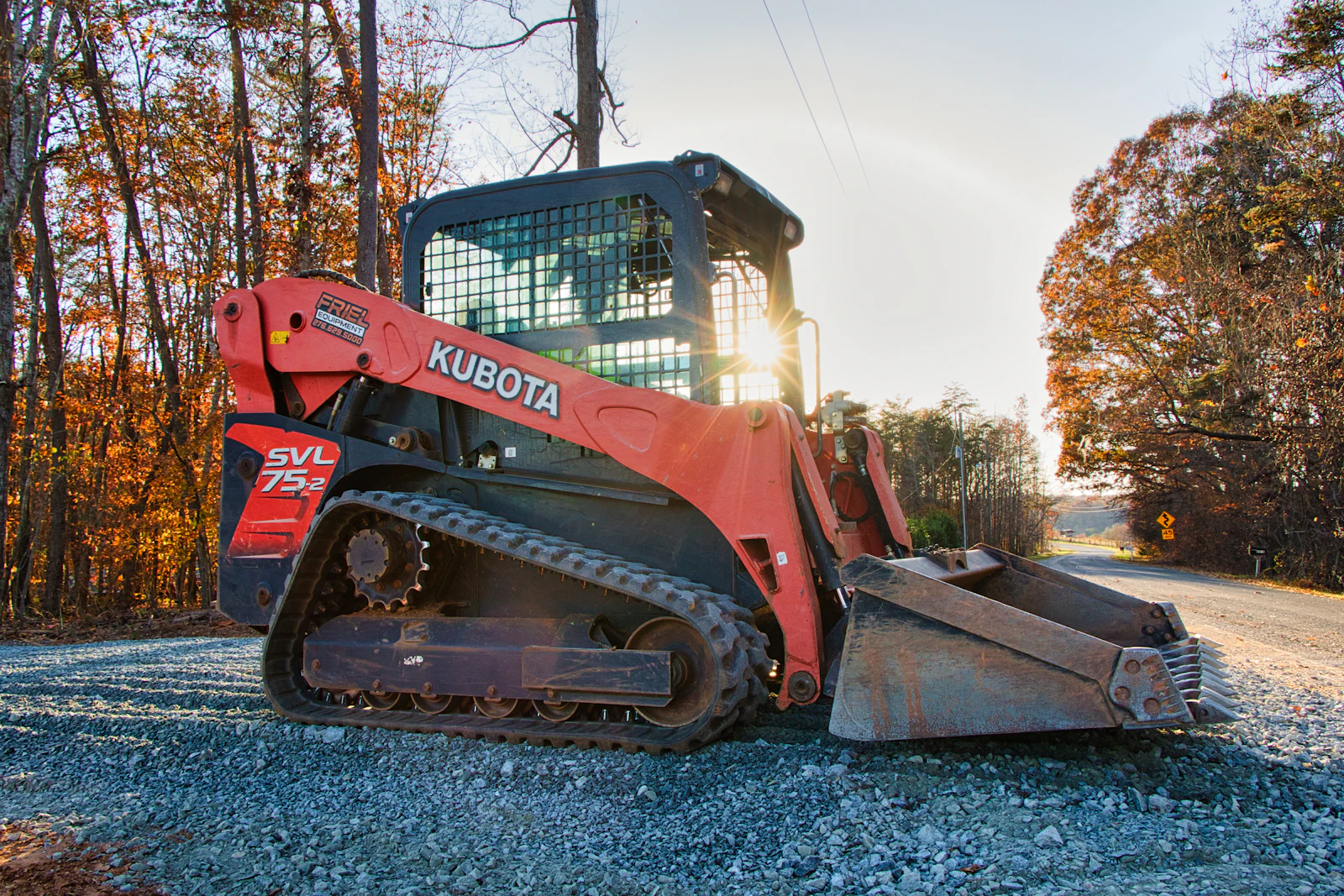
- Compact track loader (CTL) billed as skid steer class: often adds $40–$120/day over a comparable wheeled unit due to undercarriage wear and demand (especially after rain or on muddy cut/fill).
- High-flow hydraulics: plan an adder of $50–$150/day if required for a trencher, cold planer, or certain auger drives.
- Counterweight / heavier machine class: for deeper footing support or heavier spoils, expect to move toward the high end of the base range ($350–$450/day) before attachments.
Attachments And Tooling Adders (Where Footing Jobs Blow The Budget)
Footing work is attachment-driven. Many “machine only” rates look fine until you price the attachment package that makes the skid steer productive. For Dallas 2026 estimating, common attachment hire adders (machine-compatible, subject to availability) include:
- Trencher attachment (typical for continuous footing trenches): $175–$325/day plus wear items if applicable.
- Auger drive unit: $90–$160/day.
- Auger bits: $20–$45/day per bit (e.g., 12-inch or 18-inch), and budget for tooth wear in abrasive soil.
- 4-in-1 bucket: $60–$110/day (helpful for fine shaping and backdrag finish around forms).
- Toothed bucket upgrade: $25–$40/day if not included (common for clay and caliche pockets).
- Pallet forks: $25–$45/day for moving rebar bundles, formwork, and bagged materials.
- Hydraulic breaker (if you hit old slab edges or rubble): $200–$400/day (often requires high-flow and a specific coupler).
Also confirm the coupler type and hydraulic connections up front; a “wrong coupler” swap can cost $75–$150 in service time plus a half-day of downtime.
Delivery, Pickup, And On-Rent Timing Rules In Dallas
Most footing crews should assume delivery and pickup are not free, and they are often the fastest way to lose rate control. In the Dallas–Fort Worth area, typical delivery within the metro is frequently quoted around $75–$200 each way for this class, with heavier or track units trending higher, and with outlying locations (e.g., far north or far east of the core) sometimes adding mileage or zone charges.
Operational Constraints That Change The Invoice
- Delivery cutoffs: Many yards require next-day orders or a morning cutoff (often around 2:00–4:00 PM) to guarantee next-day delivery. Miss the cutoff and you may pay for an extra on-rent day while waiting.
- Off-rent rules: A common industry practice is that off-rent must be called in before a set time (often by 3:00 PM local) to stop billing the next day; if you call late, you can be billed an additional day. Always document the off-rent confirmation number in your closeout file.
- Weekend billing: If a machine delivers Friday and you off-rent Monday, some contracts effectively bill 3 calendar days even if the crew only used it for one shift. If you truly only need one day, push for a weekday delivery and next-day pickup.
- After-hours access: If the site cannot accept delivery during normal hours, plan an after-hours delivery/pickup premium (often $150–$300).
Metered Hours, Shift Limits, And Overage Charges (The Quiet Cost Driver)
Skid steers are frequently governed by shift definitions in rental terms. As an example of published rental practices, some major rental contracts define basic rates as one shift use: 8 hours/day, 40 hours/week, and 160 hours per 4 weeks, and then bill excess use at fractions of the base rate (e.g., 1/8 of the daily per excess hour on a daily rental).
For estimating, translate this into an hourly exposure so PMs understand what “running long” costs. Example: if the day rate is $320/day, the implied excess-hour charge can price around $40/hour (because 1/8 of $320 = $40). On a footing dig where you run 3 extra hours to complete a pour-ready trench, that is an unplanned $120 even before taxes and fees.
Hidden-Fee Breakdown (Common Line Items To Expect On Skid Steer Hire)
To keep equipment hire costs controlled for digging footings, proactively plan and negotiate the following common invoice items:
- Damage waiver / rental protection plan (RPP): Often priced as a percentage of rental charges (commonly budget 10%–15% if you are not providing your own compliant insurance and decline is not allowed by policy). Separately, read what the plan actually changes: for example, Sunbelt’s published RPP terms describe limits on what Sunbelt collects for certain loss/damage scenarios (e.g., caps tied to 10% of fair market value for loss and 10% of repair charges for incidental damage, each with a stated maximum per piece, subject to conditions and exclusions).
- Environmental / recovery fees: Plan 2%–6% of rental charges as a common range (varies by vendor and category).
- Transportation fuel surcharge: Some vendors apply a transportation surcharge percentage that fluctuates; published examples show total surcharge calculations that can reach the mid-teens (e.g., an example combining fixed and variable components producing 16% with a $16 minimum, applied to transportation rates).
- Fuel / refuel charges: Most agreements require “full-to-full.” If returned low, budget $6–$9/gal plus a service/admin line (often $25–$50).
- Cleaning charges: If the unit comes back with clay packed into the undercarriage or concrete slurry on the chassis, budget $75–$350.
- Track/tire damage: Budget a contingency of $150–$600 for a short hire if you are working near rebar cutoffs, demolition debris, or metal stakes.
- Late return / standby day: If pickup misses the window and you are still on rent, a single extra day at $200–$450 can erase your savings versus a weekly rate.
Example: Dallas Footing Dig With A Skid Steer (Numbers You Can Actually Use)
Scenario: Small commercial addition in Dallas requiring footing trenches and spoil handling. Crew wants a skid steer to support a trencher pass and keep the trench clean for inspection. Work must occur inside a 7:00 AM–4:00 PM site window, with no weekend work allowed. Soil is heavy clay; rain is possible, so traction matters.
- Machine: mid-frame tracked unit (planning) $360/day for 2 days = $720.
- Trencher attachment: $250/day for 2 days = $500.
- Delivery/pickup: $175 each way = $350.
- Damage waiver / RPP allowance: 12% of rental charges (machine + attachment = $1,220) = $146 (planning allowance; confirm your contract option and insurance requirements).
- Environmental fee allowance: 4% of rental charges = $49.
- Excess hours risk: Day rate is one shift (8 hours). If the crew runs 2 extra hours on Day 2 and the vendor bills at an implied 1/8 day rate per hour, that’s roughly $45/hour (based on $360/8) = $90.
- Cleaning contingency: $150 (clay packing in tracks).
Planning total (before tax): approximately $1,955. The same scope can land under $1,600 if you self-haul and avoid cleaning/overage, or exceed $2,300 if you slip into a weekend billing cycle or add a redelivery.
Budget Worksheet (Skid Steer Loader Hire For Digging Footings)
Use this bullet worksheet to build a controllable purchase order for skid steer loader equipment hire costs in Dallas:
- Skid steer loader base hire: ___ days at $___/day (or 1 week / 4-week month)
- Undercarriage selection allowance (wheeled vs tracked): +$___/day (plan +$40–$120/day for track if needed)
- Attachment 1 (trencher): ___ days at $___/day (plan $175–$325/day)
- Attachment 2 (auger drive): ___ days at $___/day (plan $90–$160/day)
- Auger bits: ___ bits at $___/day (plan $20–$45/day each)
- Bucket upgrade (toothed or 4-in-1): $___/day (plan $25–$110/day)
- Pallet forks (if staging forms/rebar): $___/day (plan $25–$45/day)
- Delivery + pickup: $___ each way (plan $75–$200 each way in-metro)
- After-hours / restricted access premium: $___ (plan $150–$300 if applicable)
- Damage waiver / RPP: ___% of rental (plan 10%–15% if required)
- Environmental/recovery fee: ___% (plan 2%–6%)
- Fuel/refuel: plan $6–$9/gal + $25–$50 service/admin
- Cleaning/undercarriage wash: $___ (plan $75–$350)
- Excess hour exposure: $___/hour (calculate from 1/8 day rate)
- Contingency (downtime, redelivery, weather): 5%–10% of above
Rental Order Checklist (PO, Delivery, Return, And Cost Control)
- Confirm machine class, operating weight, and whether you need high-flow hydraulics for the trencher/auger
- Confirm coupler type and attachment compatibility; document serials at delivery
- Set delivery window with site contact; include gate codes and laydown instructions
- Require driver call-ahead and note any on-site offload constraints (soft ground, overhead power, tight turns)
- Specify billing basis: daily/weekly/4-week; confirm what constitutes a “day” and “week”
- Confirm hour-meter policy and excess hour rate method (one-shift assumptions)
- Confirm weekend/holiday billing rules and off-rent cutoff time; require off-rent confirmation number
- Clarify who fuels it, what “return full” means, and refuel pricing if short
- Clarify cleaning expectations (tracks, cab, undercarriage) and document condition with photos on return
- Confirm waiver/insurance requirements (COI vs RPP) and get approvals before delivery
- Confirm delivery/pickup line items and any transportation surcharge triggers
- Return documentation: meter hours, damage notes, attachment count, and time-stamped photos
Procurement Notes For Dallas Estimators (Avoiding “Good Rate, Bad Invoice”)
For digging footings, align the hire term to the production plan. If trench inspection is likely to delay backfill, consider a weekly rate even if the “work” is two days—because the machine can sit on-rent while you wait, and the weekly may be cheaper than paying scattered daily charges plus delivery. Conversely, if you can stage spoils with trucks and only need the skid steer for a single push, focus on a true 24-hour rental with next-day pickup and written off-rent procedures. Where possible in Dallas, schedule delivery early morning and pickup early afternoon to reduce the risk of missed windows in DFW traffic and avoid accidental extra-day billing.
How To Compare Quotes For Skid Steer Loader Hire (Dallas Footing Work)
To compare skid steer loader equipment hire costs for digging footings, you need quotes that are normalized to the same assumptions. Require every supplier quote to confirm (1) the exact machine category (wheeled vs tracked, high-flow or standard), (2) included attachments and bucket type, (3) on-rent clock start/stop, (4) hour-meter allowance and overtime method, and (5) every “percent fee” applied to rental and/or transportation. Without that normalization, Dallas quotes can look $50/day apart but finish $300–$700 apart after delivery, waiver, and surcharge lines are applied.
Normalize The Billing Term (24-Hour vs Calendar Day)
Some rental programs advertise multiple term options (including partial-day) while other fleets are effectively “one-day minimum.” As a reference point, The Home Depot’s rental program notes availability of 4-hour, 24-hour, weekly, and monthly rentals in select locations, which highlights the importance of confirming what your supplier’s “day” actually means.
For commercial footing work, most trade-focused yards will still bill skid steers on a 24-hour day rate with shift-hour assumptions. If your site only allows equipment operation from 7:00 AM–4:00 PM, you may not benefit from a true 24-hour clock; in that case, negotiate for a predictable pickup and an off-rent cutoff that matches your superintendent’s workflow.
Cost Drivers Unique To Digging Footings (Attachments, Wear, And Return Condition)
Footing excavation pushes certain cost categories harder than general material handling:
- Wear items and soil conditions: Auger teeth and trencher chain wear can translate into “consumables” or repair charges if the attachment is returned damaged. For estimating, carry a $75–$250 wear contingency if you are boring in mixed fill or near gravel lenses.
- Return condition documentation: On trench jobs, machines get coated in wet clay. Budget time for a 30–45 minute clean-down before pickup and take photos of tracks, sprockets, bucket edge, and coupler to prevent disputed charges.
- Dust control indoors or near occupied facilities: If footing work is adjacent to occupied areas, you may be required to add a dust-control plan. That can mean a cleanup allowance of $150–$300/day (labor + consumables) that is not on the rental invoice but is still part of the equipment hire cost picture.
Managing Transportation And Surcharges In The Dallas–Fort Worth Metro
Dallas delivery costs often look straightforward until you add surcharge logic. Delivery/pickup is commonly priced per trip (each way), but some contracts apply a transportation surcharge that moves with diesel indices. Published examples show a surcharge calculation that can produce totals like 16% (with a $16 minimum) applied to transportation rates, not to base rental.
Practical Control Measures
- Bundle moves: If you are also hiring trench plates, compactors, or laser levels, attempt to bundle onto the same delivery to avoid paying multiple mobilizations (each mobilization can be $75–$200 one way).
- Confirm delivery radius norms: In Dallas, “in-metro” may effectively mean within 15–25 miles of the yard. Beyond that, plan a mileage adder such as $4–$7/mile or a zone step-up (quote-specific).
- Set a hard pickup time: Missed pickup can accidentally add a full extra day at $200–$450 or push you into weekend billing.
Insurance, Waiver, And Liability Costs (Budgeting Without Guessing)
Most large suppliers require you to either (a) provide proof of property insurance that meets contract requirements or (b) purchase their rental protection plan (RPP) where applicable. United Rentals states that you must either show proof of property insurance in accordance with its rental terms or purchase RPP.
From a cost-planning standpoint, treat waiver/RPP as a line item that can materially change the all-in hire. Even when an RPP reduces certain damage-loss exposure, it is not the same as broad liability coverage, and it typically comes with conditions/exclusions. For example, Sunbelt’s RPP terms describe specific caps (including 10% of repair charges for incidental/accidental damage up to a stated maximum per occurrence, and tire-related terms), which can be helpful for budgeting but should not be assumed to cover all site risks.
Rate Strategy: When Weekly Or 4-Week Hire Beats Daily For Footings
If you are coordinating a footing schedule with inspections, formwork, and concrete availability, the cheapest cost outcome is often about reducing “idle paid days.” Consider these Dallas planning triggers:
- Inspection risk: If you have a realistic chance of a 1–2 day inspection delay, weekly hire can protect you from paying multiple daily rates plus missing pickup windows.
- Weather risk: Dallas rain events can shut down trench work quickly. Track units keep working in marginal conditions but carry higher hire and potentially higher cleaning exposure.
- Attachments availability: If a trencher is scarce and you secure it for a week, it can be cheaper than releasing it and then paying another delivery plus a new minimum term later.
Field Controls That Reduce Total Equipment Hire Costs
- Pre-stage spoils: Have dump trailer(s) ready so the skid steer is always producing and not waiting. Avoid extending the hire from 2 days to 3 days due to hauling bottlenecks.
- Assign one trained operator: Reduce curb strikes, track damage, and coupler mishandling. A single damaged hydraulic line can create a $250–$900 repair exposure plus downtime.
- Document meter hours daily: If you are capped at 8 hours/day for base rate assumptions, knowing you’re at 7.5 hours lets you decide whether to push or stop.
- Plan refuel/recharge explicitly: Put “fuel on return” on the foreman’s closeout checklist to avoid $6–$9/gal refuel plus service fees.
Closeout Guidance: Preventing Disputes And Back-Charges
Rental closeout is where footing jobs commonly leak money. Before calling off-rent, require: (1) photos of all sides, (2) close-ups of bucket cutting edge and coupler, (3) hour meter photo, (4) attachment count photo, and (5) fuel level photo. Then clean down enough to show condition. This typically costs 0.5 labor-hour but can prevent a cleaning charge of $150+ or a disputed damage claim that takes weeks to unwind.
2026 Planning Ranges Recap (Dallas Skid Steer Hire For Footings)
As a final estimator’s recap for Dallas 2026: plan base skid steer loader hire at $200–$450/day, $640–$1,620/week, and $1,700–$4,275 per 4-week month, then add realistic allowances for delivery ($75–$200 each way), attachments (often $90–$325/day per attachment), waiver/RPP (commonly budget 10%–15%), environmental/recovery fees (2%–6%), and hour overage exposure tied to one-shift assumptions (8 hours/day).